The eclipse of the sun:
There are two types of solar eclipses.
First, we have the full solar eclipse, which happens when the moon is not near the axis of sun-earth, therefore the moon can't block totally the sunlight.
The second solar eclipse is an annular eclipse.
That type of eclipse different from the others by appearance of shining annulus around him, instead of full hide of the sun by the moon.
Moreover, the solar eclipse confuses the animals' sense of time. Animals who act in the day behave as if the night is down, and compared to them, animals that act in the night became active.
Finally, the solar eclipse is a short and impressive event, where complete darkness prevails and the stars glow fullness.
Lunar eclipse:
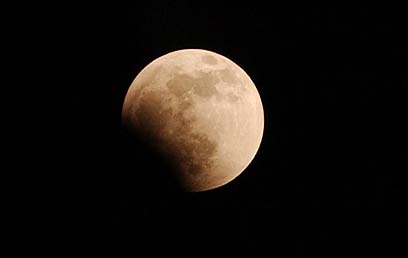
There are three types of lunar eclipses.
First, we have the full lunar eclipse, in which all the moon is shadowed.
Secondly, we have the local lunar eclipse, in which only part of the moon is totally shadowed and the other part is partially shadowed. The last type of lunar eclipse is the lunar eclipse partial shadowed, in which part of the moon is shadowed and the other part is lighted. The type and length of an eclipse depends upon the moon's location proportionately to its orbital nodes.
Eventually, the three types of lunar eclipses we have happen when the earth is located exactly between the sun and the moon, casts shadow over the moon and shadowed him.

